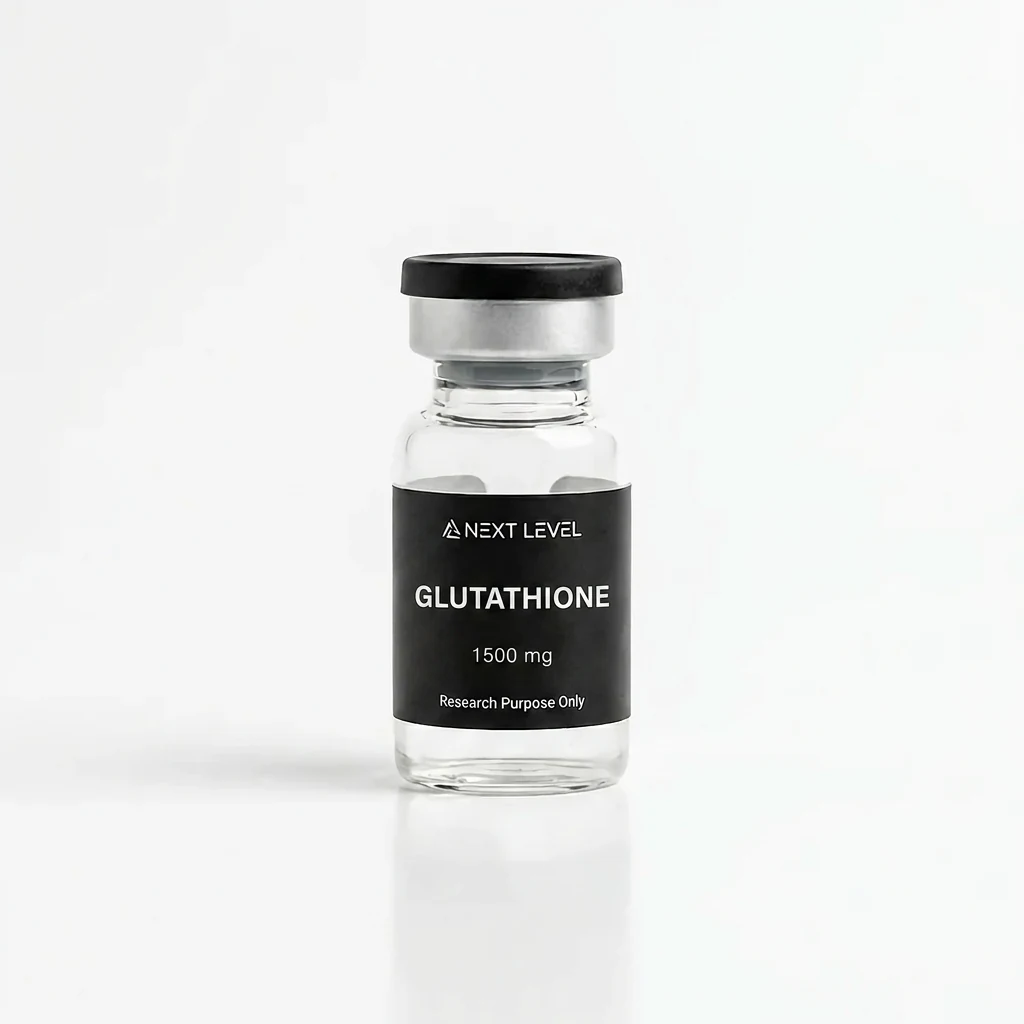
Is Glutathione third-party tested? +
Yes. Every Glutathione lot is independently tested by HPLC and LC-MS and graded Finnrick A · 9.1, at 99.73% purity. The signed certificate of analysis for the exact lot you receive is published on the lab reports page and available before you order.
How do I verify my Glutathione is legit? +
Match the lot number printed on your vial to the certificate of analysis published on the Next Level Labs lab reports page. It names the lab, batch, purity, and identity confirmation for that exact lot, so a real report always maps to your specific vial.
Is Glutathione for human use? +
Glutathione is a research compound for in vitro laboratory use only, not for human or veterinary use. Nothing here is medical advice and no statement has been evaluated by the FDA.
How fast does Glutathione ship? +
Orders paid before 5pm ET on a business day ship the same day via UPS with tracking, in plain unbranded packaging. After that, the next business day. UPS 2-Day Air is a flat $9.99 and free over $200, with Next Day Air available at checkout. Continental US only.
How much does Glutathione cost? +
The price is listed on this page, above the add-to-cart button. Next Level Labs prices per vial with no membership or subscription required. UPS 2-Day Air is a flat $9.99 and free over $200, with Next Day Air available at checkout.
Where can I buy Glutathione in the USA? +
Next Level Labs ships Glutathione direct from the United States. Orders paid before 5pm ET on a business day dispatch the same day, tracked and in plain unbranded packaging. Continental US only. There is no walk-in or retail location, so orders are placed on this page.
Is Next Level Labs a legit place to buy Glutathione? +
Every Glutathione lot is tested by an independent ISO/IEC 17025 laboratory and the signed certificate of analysis is published before you order. Match the lot number printed on your vial to the report on the lab reports page. If the lot on the glass is not published there, do not use it.