The Stacks · Research Combinations
Compounds frequently studied in parallel.
A research stack is a combination of compounds studied across different pathways at once, rather than in isolation. Each stack lists the full vial set in a single click. For in vitro and animal model research only.
GLP-3 RT TRIO · 3× GLP-3 RT, 10 MG · BAC WATER
Three vials of GLP-3 RT. 10% under list.
GLP-3 RT is in more Next Level Labs orders than any other compound. The Trio groups three 10 mg vials with the 30 mL bacteriostatic water to reconstitute them, for 10% less than buying them one at a time.
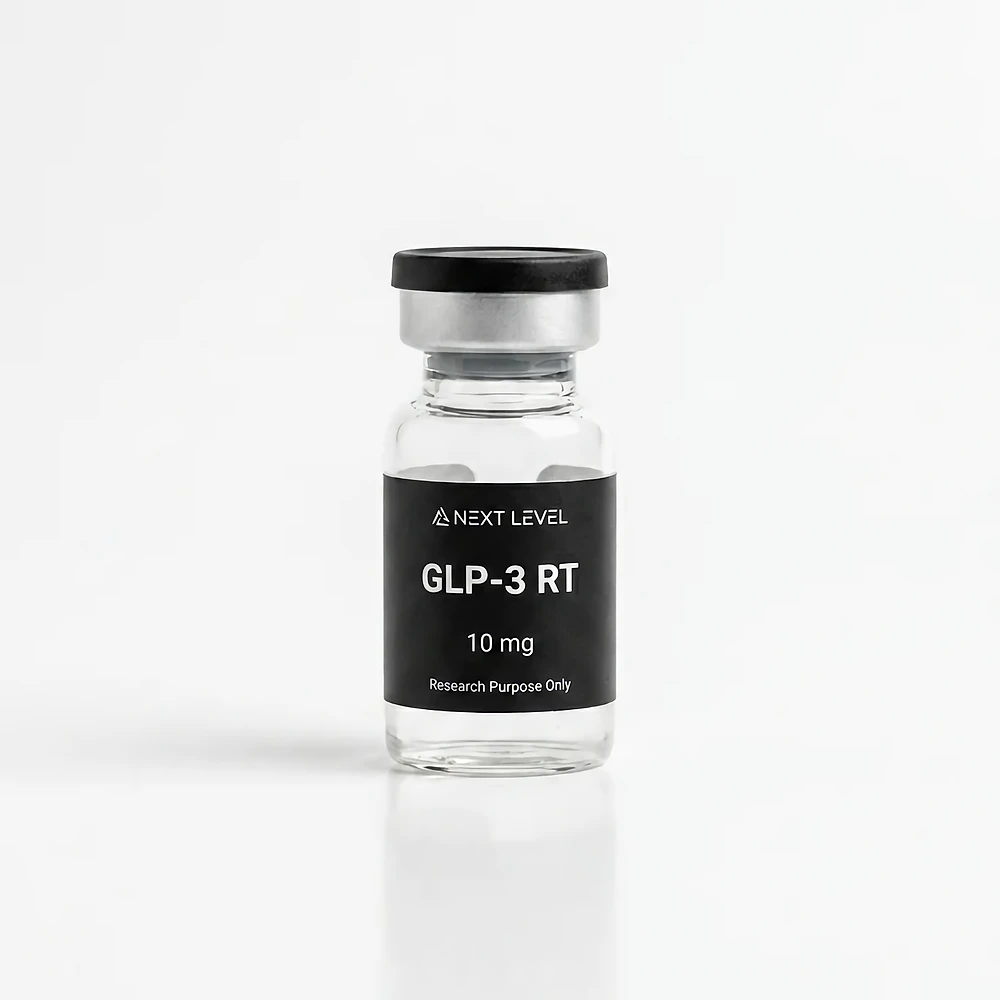

What's in the Trio?
GLP-3 RT is a triple agonist studied at GLP-1, GIP, and glucagon receptors (Phase 3, not FDA approved), supplied lyophilized at 10 mg per vial. Three vials, plus a 30 mL vial of bacteriostatic water for reconstitution. For in vitro and animal model research only.
How the price works
- Priced in the cart.Three GLP-3 RT and a 30 mL bac water get the Trio price however you add them. No code to enter.
- One code still works.A promo or affiliate code comes off the Trio price.
- Ships free.The Trio clears the $200 free-shipping line on its own.
The GLP-3 RT Trio contains GLP-3 RT (Phase 3, not FDA approved) and bacteriostatic water, sold as research compounds for laboratory use only. Not for human consumption. Not intended to diagnose, treat, cure, or prevent any disease. Must be 21+.
GLP-3 RT + KLOW RESEARCH PAIR · 1× GLP-3 RT, 10 MG · 1× KLOW BLEND, 80 MG · BAC WATER
The pair researchers already build. In one click.
GLP-3 RT and KLOW are the two compounds most often ordered together at Next Level Labs. The pair groups triple-agonist receptor work with KLOW four-peptide repair work, plus the bacteriostatic water to reconstitute both.
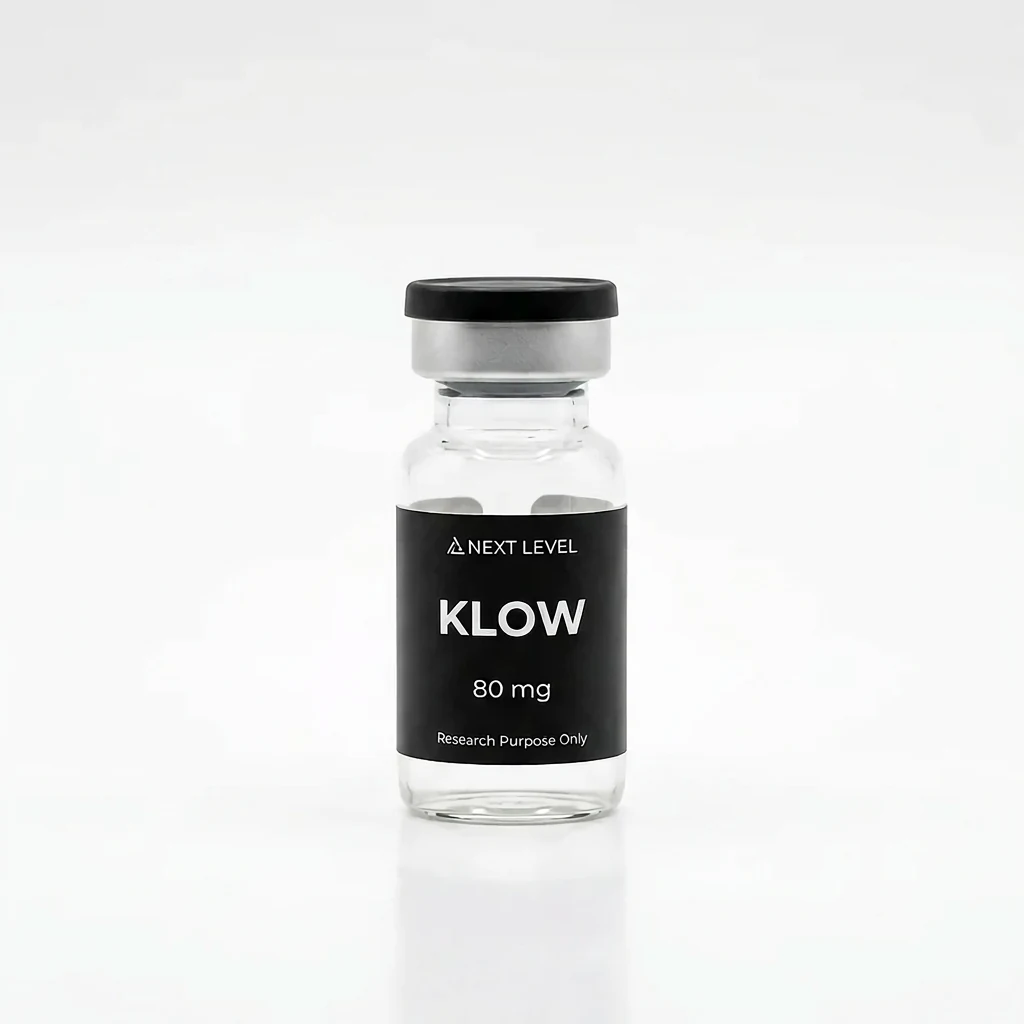
What's in the pair?
GLP-3 RT is a triple agonist studied at GLP-1, GIP, and glucagon receptors (Phase 3, not FDA approved). KLOW is a four-peptide research blend (KPV + BPC-157 + TB-500 + GHK-Cu) studied for tissue repair, NF-kB inflammation pathway, and gene-expression work. A 30 mL vial of bacteriostatic water is included for reconstitution.
Research applications
- Triple-agonist signaling.GLP-3 RT references retatrutide, a triple-agonist studied at GLP-1, GIP, and glucagon receptors in third-party Phase 2 trials (Jastreboff, NEJM 2023). Studied in vitro for receptor-binding affinity.
- NF-kB inflammation pathway.KPV studied for ~65% reduction in TNF-alpha in colonic-inflammation models (Bettenworth, J Immunol 2011).
- Gene-expression research.GHK-Cu modulates ~4,000+ genes toward a younger repair profile in published transcriptomic analysis (Pickart, OMCL 2018).
The GLP-3 RT + KLOW Research Pair combines GLP-3 RT (Phase 3, not FDA approved), KPV, BPC-157, TB-500, and GHK-Cu, sold as research compounds for laboratory use only. Not for human consumption. Not intended to diagnose, treat, cure, or prevent any disease. Must be 21+.
STACK 1 · GLP-3 RT + CJC/IPA + MOTS-C · METABOLIC RESEARCH STACK
Three pathways. Studied in parallel.
A research combination pairing triple-agonist receptor work, GH-axis pulsatility, and mitochondrial signaling. The published findings on each compound, grouped for parallel-pathway research.


What's a stack?
A research stack is a combination of compounds studied across different pathways at the same time, rather than in isolation. The published findings on each compound, grouped for parallel-pathway research.
What's in Stack 1?
GLP-3 RT is a triple agonist studied at GLP-1, GIP, and glucagon receptors (Phase 3). CJC-1295 + Ipamorelin is studied for synergistic GHRH-analogue and ghrelin-mimetic action on pulsatile GH release. MOTS-C is a 16-amino-acid mitochondrial-derived peptide studied for AMPK pathway activation and mitochondrial biogenesis.
Research applications
- Triple-agonist signaling.GLP-3 RT references retatrutide, a triple-agonist studied at GLP-1, GIP, and glucagon receptors in third-party Phase 2 trials (Jastreboff, NEJM 2023). Studied in vitro for receptor-binding affinity.
- GH-axis pulsatility.CJC-1295 + Ipamorelin studied for sustained 1.5–3× IGF-1 elevation in clinical research models (Teichman, JCEM 2006). Ipamorelin selectivity confirmed by Raun et al, Eur J Endo 1998.
- Mitochondrial biogenesis.MOTS-C levels rise ~12× in skeletal muscle following acute exercise (Reynolds, Nat Comm 2021). Studied for AMPK activation and exercise-mimetic effects in murine and primate models.
- Combined-pathway research.These three mechanisms have not been tested together in a single human trial. The stack groups them for parallel-pathway investigation.
Composition
A research stack designed for parallel pathway investigation, not single-compound work.Next Level Labs · Stack Brief
Stack 1 combines GLP-3 RT (Phase 3, not FDA approved), CJC-1295, Ipamorelin, and MOTS-C, sold as research compounds for laboratory use only. Not for human consumption. Not intended to diagnose, treat, cure, or prevent any disease. Must be 21+.
STACK 2 · TESAMORELIN + WOLVERINE + MOTS-C · GH-AXIS + REPAIR RESEARCH STACK
GH-axis. Repair pathways. Mitochondria.
A research combination pairing GHRH-analogue research, tissue-repair pathway peptides, and MOTS-C mitochondrial signaling.
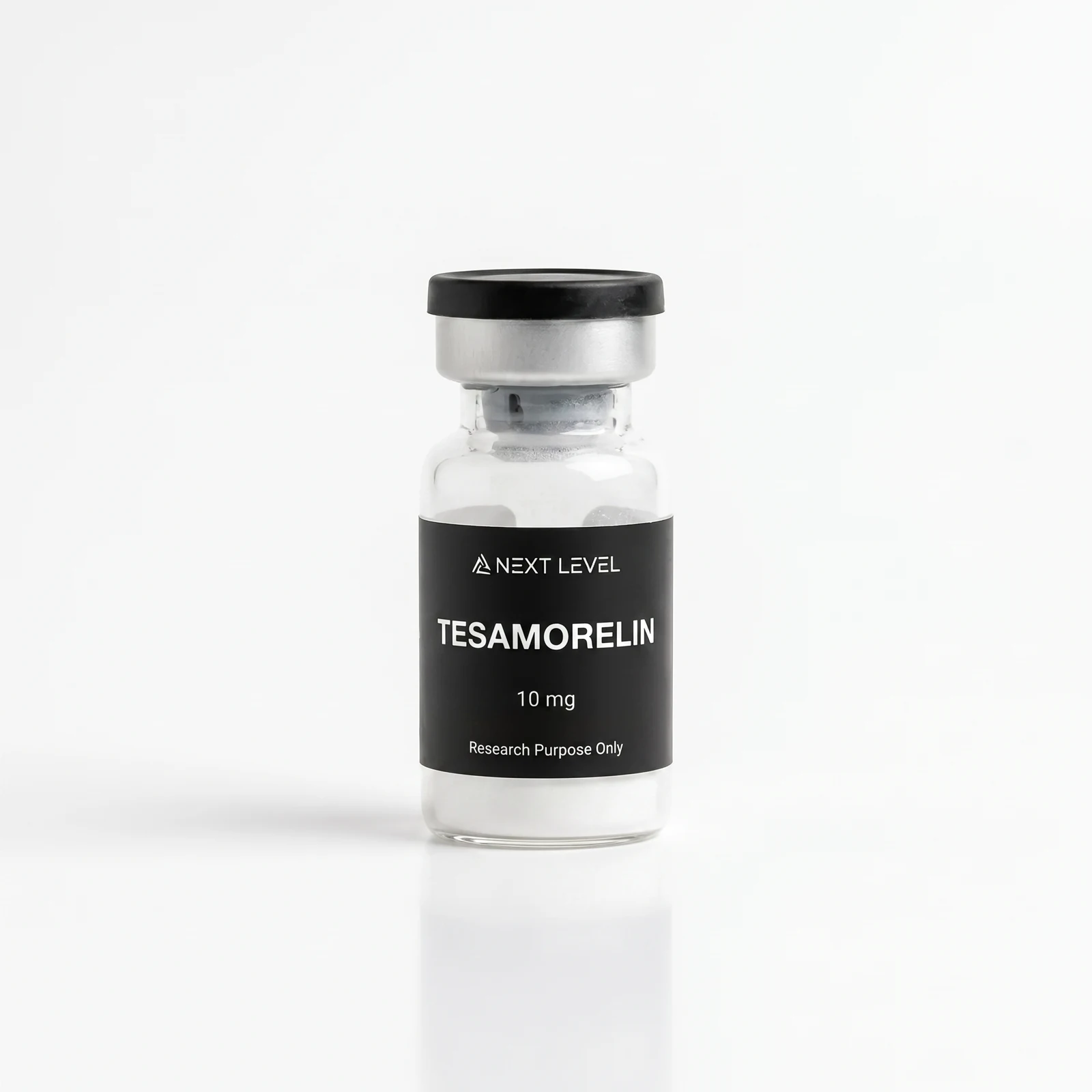

What's a stack?
A research stack is a combination of compounds studied across different pathways at the same time. Three mechanisms in parallel: GHRH-analogue work, soft-tissue repair pathways, and mitochondrial signaling.
What's in Stack 2?
Tesamorelin is tesamorelin acetate, a GHRH analogue studied for IGF-1 axis activity. Wolverine research blend is studied for angiogenesis and tendon-repair models. MOTS-C is studied for AMPK activation and mitochondrial biogenesis.
Research applications
- GHRH-analogue research.Tesamorelin acetate has been studied at the IGF-1 axis in third-party clinical research.
- Tendon and soft-tissue repair.BPC-157 demonstrated 2× accelerated healing of transected Achilles tendon in rat models (Staresinic, J Orthop Res 2003).
- Capillary density and angiogenesis.TB-500 (Thymosin β-4) demonstrated +72% capillary density in cardiac ischemia models (Bock-Marquette, Nature 2004).
- Mitochondrial response to exercise.MOTS-C levels rise ~12× in skeletal muscle following acute exercise (Reynolds, Nat Comm 2021).
Composition
GHRH-analogue research, paired with two of the most-cited compounds in tissue-repair and mitochondrial literature.Next Level Labs · Stack Brief
STACK 2 combines Tesamorelin, BPC-157, TB-500, and MOTS-C, sold as research compounds for laboratory use only. Not for human consumption. Not intended to diagnose, treat, cure, or prevent any disease. Must be 21+.
CJC/IPA + WOLVERINE + MOTS-C · GH-AXIS + REPAIR + MITOCHONDRIAL RESEARCH
GH-axis. Repair. Mitochondria.
A research combination pairing synergistic GHRH-analogue and ghrelin-mimetic action with BPC-157/TB-500 tissue-repair work and MOTS-C mitochondrial signaling.
What's a stack?
A research stack is a combination of compounds studied across different pathways at the same time. Three mechanisms in parallel: GH-axis pulsatility, soft-tissue repair, and mitochondrial signaling.
What's in Stack 3?
CJC-1295 + Ipamorelin is studied for synergistic GHRH-analogue and ghrelin-mimetic action on pulsatile GH release. Wolverine research blend is studied for tendon, ligament, and gut tissue repair in animal models. MOTS-C is studied for AMPK activation and mitochondrial biogenesis.
Research applications
- IGF-1 elevation research.CJC-1295 + Ipamorelin demonstrated 1.5–3× sustained IGF-1 elevation in clinical research subjects (Teichman, JCEM 2006).
- Tendon repair models.BPC-157 demonstrated 2× accelerated healing of transected Achilles tendon in rat models (Staresinic, J Orthop Res 2003).
- Mitochondrial response to exercise.MOTS-C levels rise ~12× in skeletal muscle following acute exercise (Reynolds, Nat Comm 2021).
- Sleep-mediated GH release.Approximately 70% of daily GH secretion occurs during deep sleep (Van Cauter, J Pediatr 1996), context for nocturnal GHRH-analogue research.
Composition
Three of the most-cited compounds in GH-axis, soft-tissue repair, and mitochondrial literature. Studied in parallel, not in isolation.Next Level Labs · Stack Brief
Stack 3 combines CJC-1295, Ipamorelin, BPC-157, TB-500, and MOTS-C, sold as research compounds for laboratory use only. Not for human consumption. Not intended to diagnose, treat, cure, or prevent any disease. Must be 21+.
STACK 4 · MOTS-C + GHK-CU + CJC/IPA · AGING SIGNALING RESEARCH STACK
Three layers of aging-signaling research.
A research combination pairing mitochondrial-derived peptide signaling, copper-tripeptide gene-expression work, and GH-axis pulsatility. Three mechanisms studied for changes that decline with age.

What's a stack?
A research stack is a combination of compounds studied across different pathways at once. Three mechanisms studied in parallel for age-related signaling: mitochondrial, gene-expression, and GH-axis.
What's in Stack 4?
MOTS-C is a 16-amino-acid peptide encoded in mitochondrial DNA, studied for AMPK activation and mitochondrial biogenesis. GHK-Cu is a naturally-occurring copper-binding tripeptide first isolated by Pickart, studied for collagen synthesis and gene-expression modulation. CJC-1295 + Ipamorelin is studied for synergistic GHRH-analogue and ghrelin-mimetic GH-axis action.
Research applications
- Gene-expression research.GHK-Cu modulates expression of ~4,000+ genes toward a younger repair profile in published transcriptomic analysis (Pickart, OMCL 2018).
- Collagen synthesis research.GHK-Cu studied for ~70% increase in Type I collagen mRNA in fibroblast research models (Huang, 2007).
- Endogenous GHK decline.Plasma GHK levels drop ~60% by age 60 (Pickart, BioMed Res Int 2015), context for replacement-signaling research.
- Mitochondrial response to exercise.MOTS-C levels rise ~12× in skeletal muscle following acute exercise (Reynolds, Nat Comm 2021).
Composition
GHK-Cu has the ability to reset gene expression to a healthier state.Loren Pickart, PhD, OMCL 2018
STACK 4 combines MOTS-C, GHK-Cu, CJC-1295, and Ipamorelin, sold as research compounds for laboratory use only. Not for human consumption. Not intended to diagnose, treat, cure, or prevent any disease. Must be 21+.
STACK 5 · WOLVERINE + CJC/IPA + GHK-CU · TISSUE-REPAIR RESEARCH STACK
Tissue repair, GH pulse, capillary signaling.
A research combination pairing BPC-157 + TB-500 angiogenesis work, CJC-1295 + Ipamorelin GHRH-analogue research, and GHK-Cu copper-tripeptide signaling. Three mechanisms studied across the soft-tissue repair literature.
What's a stack?
A research stack is a combination of compounds studied across different pathways at the same time. Three mechanisms in parallel: angiogenesis and soft-tissue repair, GH-axis signaling, and copper-tripeptide gene-expression work.
What's in Stack 5?
Wolverine research blend is studied for angiogenesis and tissue regeneration in animal models. CJC-1295 + Ipamorelin is studied for GHRH-analogue and ghrelin-mimetic action on pulsatile GH release. GHK-Cu is studied for VEGF expression, capillary formation, and gene-expression modulation toward repair.
Research applications
- Tendon-repair research.BPC-157 demonstrated 2× accelerated healing of transected Achilles tendon in rat models (Staresinic, J Orthop Res 2003).
- Capillary density research.TB-500 (Thymosin β-4) demonstrated +72% capillary density in cardiac ischemia models (Bock-Marquette, Nature 2004).
- VEGF and vascular formation.GHK-Cu studied for upregulation of VEGF and angiogenic signaling in wound-healing models (Pollard, Arch Facial Plast 2005).
- IGF-1 elevation research.CJC-1295 + Ipamorelin demonstrated 1.5–3× sustained IGF-1 elevation in clinical research (Teichman, JCEM 2006).
Composition
BPC-157 markedly accelerated the healing of transected Achilles tendon, with significantly improved functional, biomechanical, macroscopic and microscopic parameters.Staresinic et al., J Orthop Res, 2003
STACK 5 combines BPC-157, TB-500, CJC-1295, Ipamorelin, and GHK-Cu, sold as research compounds for laboratory use only. Cited tendon and wound data are preclinical (animal models). Not for human consumption. Not intended to diagnose, treat, cure, or prevent any disease. Must be 21+.
STACK 6 · TESAMORELIN + RETA + MOTS-C + GHK-CU · FLAGSHIP RESEARCH STACK
Four pathways. The flagship.
A four-compound research combination pairing GHRH-analogue work, triple-agonist receptor research, mitochondrial biogenesis, and copper-tripeptide gene-expression signaling.
What's a stack?
A research stack is a combination of compounds studied across different pathways at the same time. The flagship runs four mechanisms in parallel: GHRH-analogue, triple-agonist receptor, mitochondrial-derived peptide, and copper-tripeptide gene-expression.
What's in Stack 6?
Tesamorelin is studied for IGF-1 axis activity. GLP-3 RT is a triple-agonist studied at GLP-1, GIP, and glucagon receptors (Phase 3, not FDA-approved). MOTS-C is studied for mitochondrial biogenesis and AMPK activation. GHK-Cu is studied for collagen synthesis and gene-expression modulation.
Research applications
- Triple-agonist signaling.GLP-3 RT references retatrutide, studied across GLP-1, GIP, and glucagon receptors in third-party Phase 2 research (Jastreboff, NEJM 2023).
- GHRH-analogue research.Tesamorelin is studied at the IGF-1 axis in third-party clinical research.
- Gene-expression modulation.GHK-Cu modulates ~4,000+ genes toward a younger repair profile in published transcriptomic analysis (Pickart, OMCL 2018).
- Mitochondrial response to exercise.MOTS-C levels rise ~12× in skeletal muscle following acute exercise (Reynolds, Nat Comm 2021).
Composition
The flagship research stack. Four mechanisms studied in parallel.Next Level Labs · Stack Brief
STACK 6 combines Tesamorelin, GLP-3 RT (Phase 3, not FDA approved), MOTS-C, and GHK-Cu, sold as research compounds for laboratory use only. Not for human consumption. Not intended to diagnose, treat, cure, or prevent any disease. Must be 21+.
STACK 7 · KLOW + MOTS-C + NAD+ · CELLULAR LONGEVITY RESEARCH
Cellular longevity research, three vectors at once.
A research combination pairing KLOW four-peptide repair work (KPV + BPC-157 + TB-500 + GHK-Cu), MOTS-C mitochondrial signaling, and NAD+ as a foundational cellular cofactor.

What's a stack?
A research stack is a combination of compounds studied across different pathways at the same time. Three mechanisms in parallel: surface-tissue repair, mitochondrial signaling, and NAD+ cofactor research.
What's in Stack 7?
KLOW is a four-peptide research blend (KPV + BPC-157 + TB-500 + GHK-Cu) studied for tissue repair, NF-kB inflammation pathway, and gene-expression work. MOTS-C is studied for mitochondrial biogenesis and AMPK activation. NAD+ is a foundational cellular cofactor required for sirtuin enzyme activity and oxidative phosphorylation, studied across aging biology.
Research applications
- Plasma NAD+ research.NAD+ supplementation demonstrated +60% plasma NAD+ rise in aging research subjects (Martens, Nat Commun 2018).
- Gene-expression research.GHK-Cu modulates ~4,000+ genes toward a younger repair profile in published transcriptomic analysis (Pickart, OMCL 2018).
- Mitochondrial response to exercise.MOTS-C levels rise ~12× in skeletal muscle following acute exercise (Reynolds, Nat Comm 2021).
- NF-kB inflammation pathway.KPV studied for ~65% reduction in TNF-alpha in colonic-inflammation models (Bettenworth, J Immunol 2011).
Composition
NAD+ supplementation elevated plasma NAD+ levels by 60 percent and reduced systolic blood pressure by approximately 10 mmHg.Martens et al., Nature Communications, 2018
STACK 7 combines KLOW (KPV, BPC-157, TB-500, GHK-Cu), MOTS-C, and NAD+, sold as research compounds for laboratory use only. Not for human consumption. Not intended to diagnose, treat, cure, or prevent any disease. Must be 21+.
For in vitro research use only. Not for human consumption. Not evaluated by the FDA. Not intended to diagnose, treat, cure, or prevent any condition. US shipping only. Add a stack with its button and it is priced automatically in the cart, no code: 15% off (Stack 6: 20%), in place of the bulk discount, never on top of it. The same vials added one at a time get standard bulk pricing.

