
RECOVERY PATHWAY RESEARCH
CJC-1295 + Ipamorelin
GHRH analog and ghrelin mimetic referenced in pulsatile GH receptor signaling research.
$79.99/vial
RESEARCH CATEGORY
FOR IN VITRO RESEARCH USE ONLY · NOT FOR HUMAN CONSUMPTION · NOT EVALUATED BY FDA
By NLL Research Team · Reviewed September 19, 2026
GHRH analogs and ghrelin mimetics referenced in literature on pulsatile GH receptor signaling in cellular research models.
GHRH analog and ghrelin mimetic referenced in pulsatile GH receptor signaling research.
$79.99/vial
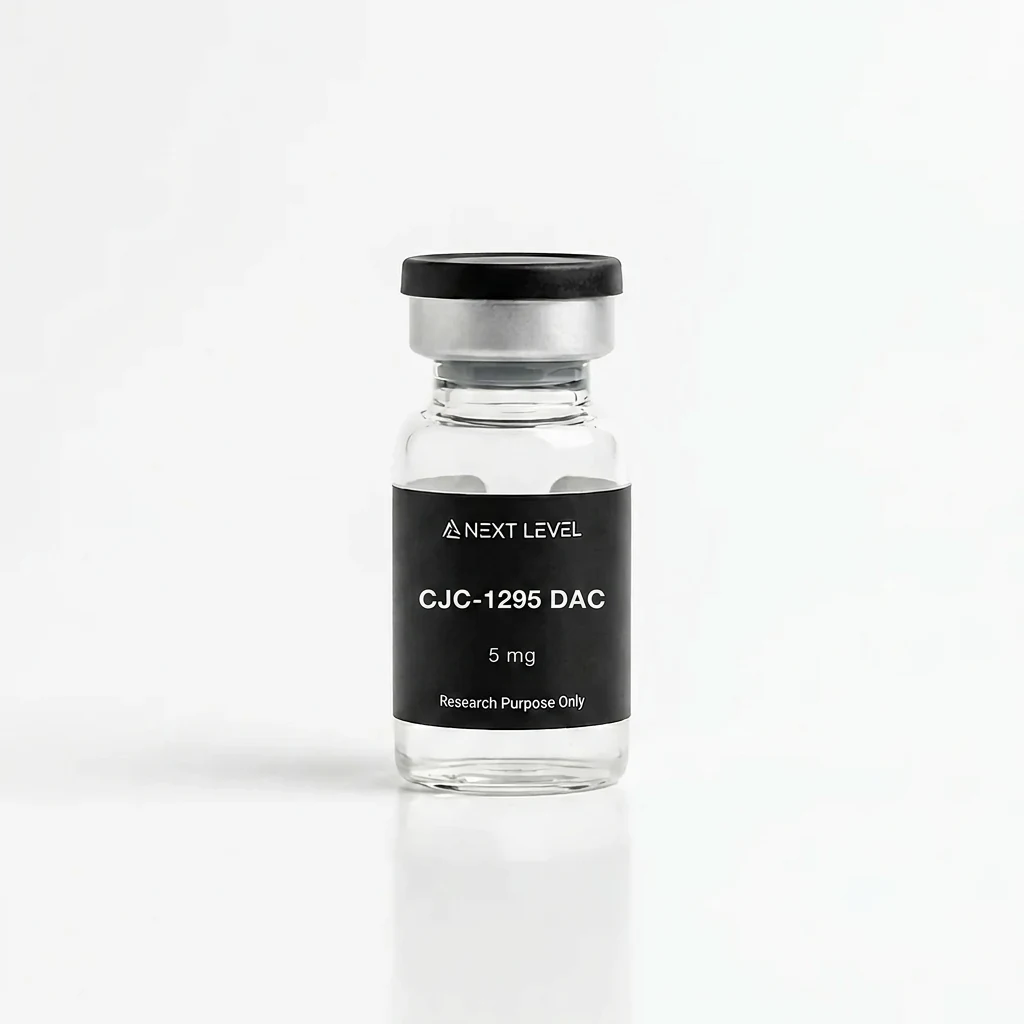
Long-acting GHRH analog with DAC referenced in literature on sustained GHRH receptor pathway research.
$69.99/vial
The recovery pathway is the research shorthand for the growth-hormone signaling axis, the cellular system published literature studies through two distinct receptors. The first is the GHRH (growth-hormone-releasing hormone) receptor on the pituitary, engaged by GHRH analogs. The second is the GHS-R or ghrelin receptor, engaged by ghrelin mimetics, also called GHRPs. Research peptides in this category are classified by which of these receptors they bind and, for the GHRH analogs, how long that signaling is sustained.
Two questions order this category cleanly. First, which receptor does the compound act on, the GHRH receptor or the ghrelin receptor. Second, for a GHRH analog, is the signaling short-acting or long-acting. Because GHRH analogs and ghrelin mimetics work through separate receptors on the same GH and IGF-1 axis, researchers frequently study them together, which is why the receptor profile, not the molecule name, is the natural starting point.
| Compound | Receptor profile | Studied for |
|---|---|---|
| CJC-1295 (no DAC, in blend) | Short-acting GHRH analog (GHRH receptor) | Pulsatile GHRH-receptor signaling |
| CJC-1295 with DAC | Long-acting GHRH analog (GHRH receptor) | Sustained GHRH-receptor signaling |
| Ipamorelin | Ghrelin mimetic / GHRP (GHS-R receptor) | Pulsatile GH signaling via the ghrelin receptor |
Receptor profiles reflect how each compound is characterized in published research literature. Listed for in vitro research context only.
The two NLL listings in this category take different approaches to the GH axis. CJC-1295 with ipamorelin pairs a short-acting GHRH analog with a ghrelin mimetic, engaging two separate receptors at once, the GHRH receptor and the ghrelin receptor, referenced in literature for combined pulsatile GH signaling. CJC-1295 with DAC takes the single GHRH analog and extends it, using the Drug Affinity Complex to bind albumin for a longer half-life and sustained GHRH-receptor signaling. The contrast researchers draw is two-receptor pulsatile signaling versus single-receptor sustained signaling. NLL supplies both as lyophilized research compounds, third-party US lab tested, with a certificate of analysis tied to the lot number on every vial.
The recovery or GH pathway refers to the growth-hormone signaling axis, studied in literature through the GHRH receptor on the pituitary and the GHS-R or ghrelin receptor. GHRH analogs act on the GHRH receptor to study pulsatile GH release, ghrelin mimetics act on the separate ghrelin receptor, and the two are often studied together on the GH and IGF-1 axis in cellular and animal models.
Both are GHRH analogs studied at the GHRH receptor, but they differ in how long that signaling is sustained. CJC-1295 with DAC carries a Drug Affinity Complex that binds albumin for an extended half-life, referenced for sustained GHRH-receptor signaling. The non-DAC form, used in the CJC-1295 plus ipamorelin blend, is shorter acting and studied for a more pulsatile profile.
CJC-1295 and ipamorelin act on different receptors. CJC-1295 is a GHRH analog studied at the GHRH receptor, while ipamorelin is a selective ghrelin-receptor agonist, a GHRP, studied at the GHS-R or ghrelin receptor. Because the two engage separate receptors on the same growth-hormone axis, they are referenced together in literature for combined pulsatile GH signaling in research models.
No. Every compound here is intended for in vitro laboratory and research use only. It is not for human consumption, is not a drug or supplement, and these statements have not been evaluated by the FDA. The products are not intended to diagnose, treat, cure, or prevent any condition.
Next Level Labs ships across the continental United States. Most orders ship within 1 to 2 business days via UPS 2nd Day Air in discreet, unbranded packaging, flat 10 dollar shipping and free over 200 dollars. Payment is by card, Apple Pay, Google Pay, Venmo Business, Zelle, or bank transfer, and every order is backed by a COA-match guarantee.
For in vitro research use only. Not for human consumption. Not evaluated by the FDA. Not intended to diagnose, treat, cure, or prevent any condition. US shipping only.
Next Level Labs supplies research compounds strictly for in vitro laboratory use, never for human or veterinary consumption. Confirm both before you enter.
Nothing sold here is a drug, food or supplement, and no statement on this site has been evaluated by the FDA.
Not a researcher? Exit
